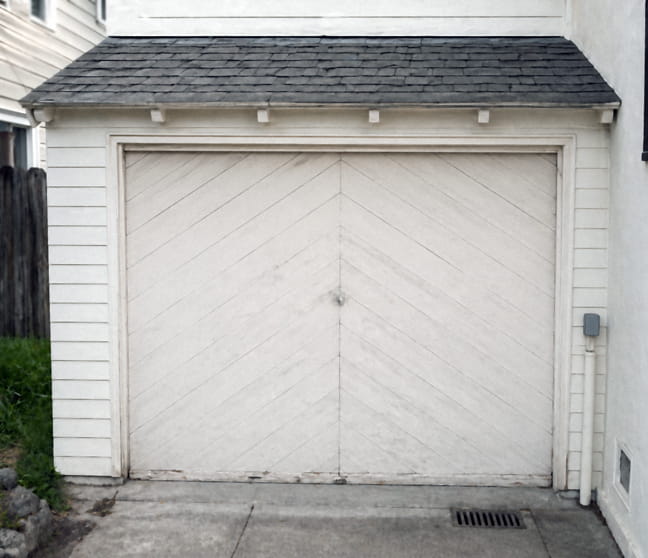
Old Tilt-Up Wood Door, One Broken Spring, and a Job That Required an Electrician First
When Keith's 1940s garage door finally gave out in Walnut Creek, replacing it wasn't as simple as swapping the door. California law required a battery backup opener — and that meant calling an electrician before Larry could finish the job.
The Call
Mike called on behalf of his father Keith, an 86-year-old Walnut Creek homeowner on Almond Avenue. They'd already been through the wringer with another company — three or four months of waiting, told they couldn't get a non-insulated door, going in circles. A single spring had snapped on Keith's tilt-up wood garage door, and the whole thing was sitting tilted on its side.
Mike had done his homework. Keith's garage is just for the car — no living space, no storage worth insulating for. Spending an extra $300 to $400 on insulation made no sense. He couldn't understand why the other company kept pushing it. He called Larry, looking for a straightforward answer.
Why Larry Had to See It First
Most garage door jobs are quote-able over the phone. This one wasn't. A 1940s house with a possibly original single-piece tilt-up door raises real questions before you can price anything: How much headroom is there above the door opening? What's the rough opening size? What's the floor-to-ceiling clearance? Are the side walls wide enough for standard track?
Tilt-up doors — both wood and steel — operate on a completely different track system than sectional doors. They swing out and up as one piece. Converting to a sectional door requires enough headroom for the horizontal tracks to run back into the garage. On a house from the 1940s, that's not always a given.
Larry came out Thursday morning, measured everything, confirmed the headroom was workable, and put together an estimate. If you'd told him what he found on a job like that could've been quoted cold over the phone, he'd have told you otherwise.
The California Battery Backup Requirement
This is the part that surprises a lot of homeowners. California Senate Bill 969 went into effect in 2019 and requires that any new garage door opener installed in California include a battery backup system. It doesn't matter if the door is being replaced for the first time in 80 years or if you're just swapping out a worn-out motor — if you're putting in a new opener, it needs a battery backup.
California SB-969: What Homeowners Need to Know
Since 2019, any new garage door opener installed in California must include a battery backup. This applies whether you're installing a brand-new opener or replacing an existing one. The law was passed so that garage doors remain operable during power outages — a real concern during wildfires and other emergencies. Non-compliant openers can result in fines up to $1,000 per opener.
The battery backup is built into compliant openers, so it's not a separate add-on. But to run a modern opener, you need a ceiling outlet. Keith happened to have one — his son mentioned the house had recent electrical upgrades. For older homes that don't, that outlet needs to get installed before the opener goes in.
This is common in older homes where the electrical setup wasn’t designed for modern garage systems.
When an Electrician Needs to Come First
Keith's situation worked out — the outlet was already there. But this comes up more than you'd think. Larry gets calls from homeowners in older Walnut Creek and Concord homes where the garage ceiling has no outlet at all. Sometimes there's a junction box but it's not wired for a 20-amp dedicated circuit. Sometimes the outlet is there but it's not up to current code.
Larry doesn't do electrical work. When a job needs it, he refers homeowners to Matt Raver at East Bay Electrician Services. Matt handles exactly this kind of pre-install electrical work — running a new circuit to the garage ceiling, installing the outlet, making sure everything is code-compliant before the opener goes in.
Need an Outlet Before Your Opener Install?
If your garage doesn't have a ceiling outlet — or if the panel isn't set up to support a new dedicated circuit — Larry works with Matt Raver at East Bay Electrician Services to get it sorted before the garage door install. Matt handles new circuit runs, outlet installation, and panel upgrades throughout the East Bay.
Electrical Panel Services — East Bay Electrician Services →What Got Installed
Once the estimate was approved, Larry scheduled the install for the following Wednesday. Keith got a clean, functional setup — exactly what his son described on the call. No extras, no upsells.
Before
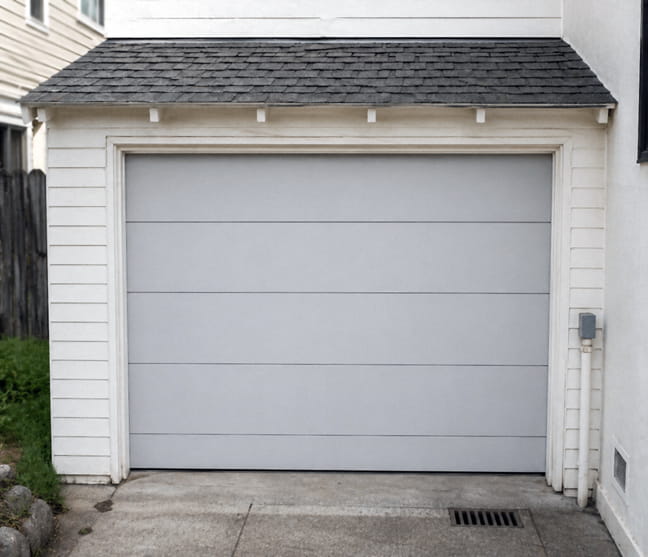 After
After
Door: Wayne-Dalton non-insulated sectional door. Single-car width, no windows. Straightforward, budget-appropriate, and a significant upgrade over the original tilt-up. Wayne-Dalton makes a solid non-insulated door for a garage that doesn't need anything more than that.

LiftMaster Chain Drive Opener
The most common unit Larry installs. Reliable, budget-friendly, and California-compliant with built-in battery backup. Includes a wall button by the interior door and a remote — exactly what Keith asked for.
The new sectional door runs on standard extension springs with standard hardware — nothing proprietary, nothing that will be impossible to service ten years from now. That alone is an upgrade from what Keith had.
What Took 80 Years to Replace
Keith's original door was likely installed sometime around when the house was built in the 1940s. That's not unusual for tilt-up wood doors — they're heavy, they're simple, and when they're hung right on good hardware they can last a long time. But when a spring goes on a door that old, the hardware isn't serviceable. The side extension springs on those old systems aren't made anymore in standard sizes, and the brackets and cables that go with them have usually been improvised over the decades.
There's no way to patch a system like that. The right call is a complete door replacement, which is what Mike and Keith had already figured out before they picked up the phone.
Why the Other Company Couldn't Get a Non-Insulated Door
"I don't understand that at all. Any insulated sectional door — you should be able to put in the same thing in a non-insulated door. That's kind of weird."
Larry, from the actual call
Mike mentioned that the previous company had told them it would be three to four months before they could get a non-insulated door. Larry's response was genuine puzzlement — non-insulated sectional doors are standard inventory. They're not a special order. If a supplier can get you an insulated door this week, they can get you the non-insulated version of the same door in the same timeframe.
There's no good explanation for what happened there. Larry doesn't know the other company's situation. But his take is simple: if a homeowner doesn't need insulation, there's no reason to push it on them.
What This Job Covers
This is a case study about a complete door replacement, but there are a few things worth noting separately for anyone in a similar situation:
- California requires battery backup on all new opener installations — this is not optional and applies to every job Larry does
- Tilt-up wood and steel doors cannot have their springs replaced with modern hardware in most cases — full replacement is the right call
- Low-headroom situations (common in older homes) are assessable on-site but not over the phone
- A ceiling outlet is required before an opener can be installed — if yours is missing, that's an electrician call before a garage door call
- Non-insulated sectional doors are standard stock — if you're being told otherwise, get a second opinion
In Larry's own words
"I try to give people a straight answer. If someone doesn't need insulation, I'm not going to tell them they do. If I need to look at something before I can quote it, I'll say that too. Keith needed a door that works. That's what he got."
Thinking About a Door Replacement?
If you've got an older tilt-up door — wood or steel — and a spring has broken or the hardware is shot, a replacement is almost always the right move. Larry serves Walnut Creek and the surrounding areas across Contra Costa County. He'll come out, measure, and give you an honest quote with no pressure.
If your garage doesn't have a ceiling outlet yet, don't let that stop you from calling. Larry can coordinate with Matt at East Bay Electrician Services to get the electrical done first, then schedule the door install once it's ready.
Need a Garage Door Replacement in Walnut Creek?
Call Larry. He'll come out, take a look, and give you a straight quote — no runaround, no upsells you don't need.